
Palo Alto, CA · Water Heater Repair
Water Heater Repair in Palo Alto, CA: Find Out Where It Is Leaking Before You Decide
No hot water this morning, or a puddle forming around the base of the tank. The first thing worth knowing is where the water or the failure is actually coming from, because a leaking fitting is a repair and a leaking tank is not.
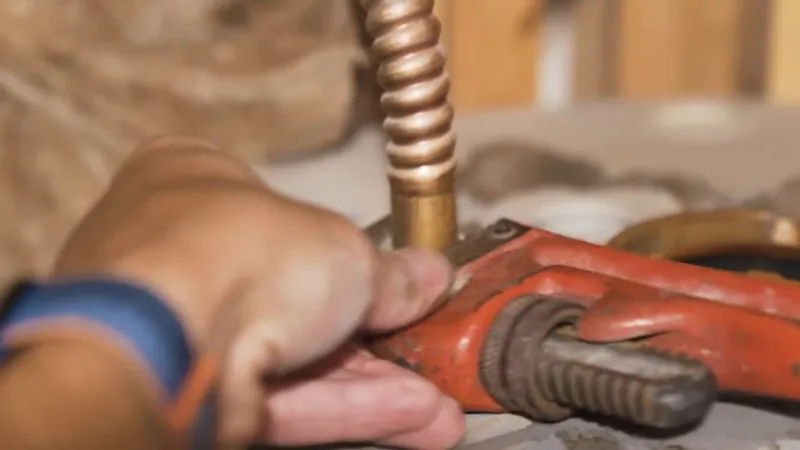
Where is the water heater leaking from?
A leak is the most frequent water heater complaint, and the location of the water tells you most of what you need to know. Dry the area with a towel, wait ten minutes, and look at where it comes back first.
| Where the water is | Usual cause | Repairable? |
|---|---|---|
| Top of the tank, at the pipes | Loose or corroded supply connection or dielectric fitting | Usually yes |
| Side, from a small pipe | The temperature and pressure relief valve discharging | Usually yes, once the cause is found |
| Drain valve near the bottom | A worn or partly open drain valve | Yes |
| Pooling under the tank itself | The tank lining has corroded through | No. The tank needs replacing |
A tank that is leaking from its own body cannot be patched. Turn off the cold supply at the top of the heater, turn off the gas or the breaker, and call. Water from a fitting or a valve, on the other hand, is usually a same-visit repair.
What to do before the plumber arrives
- Close the cold supply. The valve sits on the cold pipe at the top of the tank. Closing it stops the tank refilling, so the leak stops growing.
- Turn off the heat source. On a gas unit, turn the control knob to off. On an electric unit, switch its breaker off at the panel.
- Leave the draining to the plumber. The water inside can be hot enough to scald, so do not open the drain valve yourself.
- Clear the floor around it. Move stored boxes and anything electrical out of the water's path, and use towels to keep it from spreading.
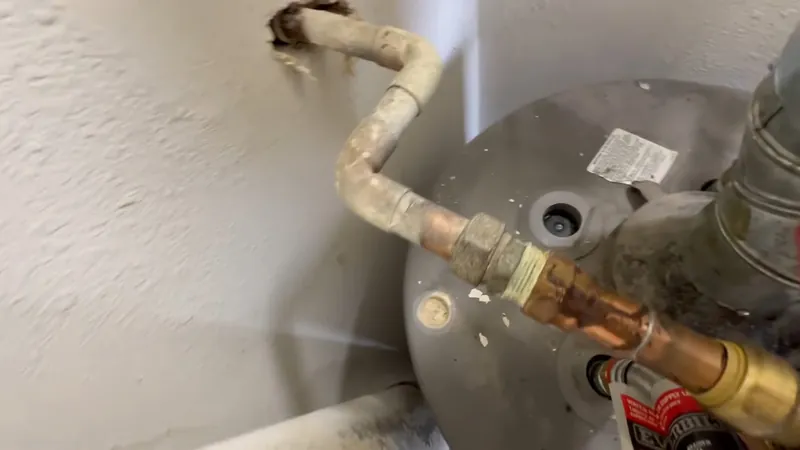
Water around the tank? Shut the cold supply off and call for a repair visit.
Call (833) 840-2034Gas water heater: no hot water, or a pilot that will not stay lit
Most gas units in Palo Alto garages and closets are standard atmospheric tanks, and their failures follow a familiar pattern. If it lights but goes out when you release the knob, the flame sensor or thermocouple is the usual suspect.
- Pilot will not stay lit. Usually a thermocouple or flame sensor that no longer reads the flame. A routine part.
- Pilot lit, burner will not fire. Often the gas control valve, which is a bigger repair and worth weighing against the age of the tank.
- Burner fires but water stays lukewarm. A broken dip tube can mix cold water into the hot outlet. It is a minor part on a tank that otherwise works.
- Smell of gas near the heater. Leave the house without operating switches or appliances, then call 911 or the City of Palo Alto Utilities 24-hour gas line, (650) 329-2579, from outside. The city runs Palo Alto's gas system, so that is the right call before a plumber.
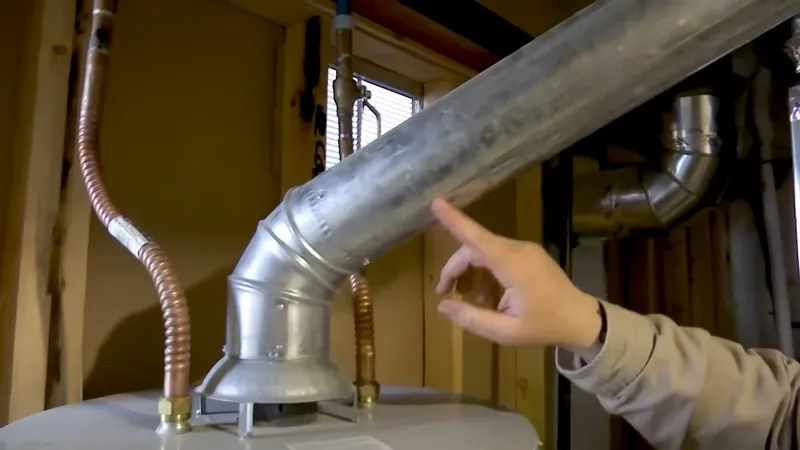
We also check the flue on every gas repair. A vent that has separated or is back-drafting is a safety problem, not a hot water problem, and it can be present on a heater that otherwise works perfectly.
Electric water heater: lukewarm water or a tripped breaker
Electric tanks have two heating elements and two thermostats, and between them they account for nearly every no-heat call. Running out of hot water much faster than you used to typically means the lower element has failed.
- Check the breaker. A tripped breaker that trips again immediately points to a shorted element. Do not keep resetting it.
- Note how much hot water you get. A short burst of hot then lukewarm suggests the lower element. No heat at all suggests the upper element or its thermostat.
- Leave the covers on. The element panels sit next to live 240-volt terminals. Testing them is a job for the plumber.
Elements and thermostats are replaceable parts, and on a tank that is otherwise sound they are usually worth replacing rather than the whole heater.
Why Palo Alto's low-mineral water changes the usual diagnosis
In many cities a failing water heater is blamed on hard water, and the advice is to flush the tank and fit a softener. That diagnosis does not hold up well here.
Palo Alto's own utility measured an average of 62 mg/L of hardness in its 2025 testing, about 3.6 grains per gallon, at the boundary between soft and moderately hard and far below hard-water regions. The supply comes mainly from Hetch Hetchy snowmelt through the SFPUC regional system, and no groundwater wells were used in 2025.
The practical result is that sediment and scale are less often the reason a Palo Alto tank fails. Age and component wear usually are. Flushing still does no harm, but it is not the cure-all here that it is in harder-water areas, and a softener is rarely the right fix.
Lukewarm water or a tank that has stopped heating? Repair visits for either fuel type.
Call (833) 840-2034Earthquake straps, checked on every repair visit
California Health and Safety Code section 19211 requires every new, replacement and existing residential water heater to be braced, anchored or strapped to resist falling or moving in an earthquake. Palo Alto sits about 5.2 miles from the San Andreas Fault, so this is not a box-ticking exercise.
- Two straps, one in the upper third of the tank and one in the lower third, fixed into the wall framing.
- Flexible gas and water connectors, so the tank can shift slightly without snapping a rigid line.
- When you sell a home, the law requires the seller to certify the heater is braced in writing.
If your heater is unbraced or still on rigid connectors, we will point it out during the repair. It is a short job, and it is also the thing most likely to be flagged on a pre-sale inspection.
Shower or tap running lukewarm, but the tank is fine
Sometimes the water heater is blamed for a fixture problem. If only one shower runs lukewarm while the kitchen tap is hot, the tank is probably fine and the shower's mixing valve or cartridge is the issue.
We check both on the same visit, since repairing a water heater that was never the fault is an expensive mistake. A failing shower valve or faucet cartridge is a smaller and quicker fix than anything on the tank.
When repairing the tank stops making sense
A repair is worth it on a tank that is mid-life and sound. It stops being worth it when the tank itself is leaking, or when an expensive part such as a gas control valve fails on a heater that is already well into its second decade.
As a general guide, tank water heaters tend to last somewhere around 8 to 12 years, though that varies with use and with how the tank was installed. If you are at that point, the water heater replacement page covers what a new install involves in Palo Alto, including the city's current position on gas and heat pump units. For an endless-hot-water option, see tankless water heaters.
Water heater repair questions
How much does water heater repair cost in Palo Alto?
A part such as a thermocouple, element or drain valve is a modest repair, while a gas control valve costs considerably more. We give a written range once the fault is found. If the tank itself has failed, the comparison point is replacement, which typically runs from about $1,200 to $2,800 for a standard tank depending on size, venting and code upgrades.
Does water heater work in Palo Alto need a plumber with a California license and a permit?
Replacing a water heater generally needs a building permit and an inspection covering the relief valve discharge, venting and seismic strapping. Simple part replacements usually do not. Whoever does the work should hold a California C-36 plumbing license you can verify on the CSLB public lookup.
My T&P valve is dripping. Is that dangerous?
The temperature and pressure relief valve is a safety device, and a drip means it is either worn or doing its job because pressure or temperature is too high. Do not cap or plug it. A worn valve is a simple replacement, but if pressure is the cause, an expansion tank or a pressure-reducing valve may be what is actually needed.
How long should a water heater last in Palo Alto?
Tank units generally last around 8 to 12 years. Palo Alto's low hardness means scale is a smaller factor here than in hard-water areas, so age, installation quality and component wear tend to decide it instead.
Do I really need earthquake straps on my water heater?
Yes. California law requires them on new, replacement and existing residential water heaters, and a seller has to certify compliance in writing. With the San Andreas Fault roughly five miles away, an unstrapped tank is a real risk to gas and water lines in a quake.
Water heater not working in Palo Alto?
Call for a repair visit. We find the actual fault first, tell you plainly whether the tank is worth saving, and put the repair range in writing so you can decide.