
Palo Alto, CA · Sewer Line Repair · Lateral and Main
Sewer Line Repair in Palo Alto, CA: Whose Line Is It and What Does the Camera Show?
Every drain in the house is slow, the toilet gurgles when the washing machine empties, or water is coming up through the lowest drain. That is the sewer lateral, and in Palo Alto the first question is not how to fix it but whose section of the line has failed. Sewer line repair and replacement in Palo Alto, CA starts with a camera look at the pipe and a clear answer on whose line it is.
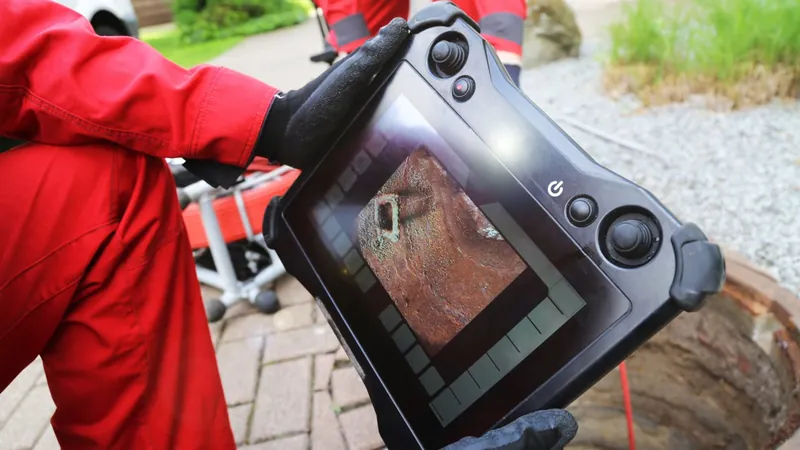
Is the blockage on your section of the lateral or the city's?
Palo Alto settles this in writing. Its wastewater rule, Rule and Regulation 23, adopted by the city utility in October 2019, divides every lateral at the first city sewer cleanout, and the location of that dividing point decides who pays.
| Your situation | City responsibility | Your responsibility |
|---|---|---|
| Main in the street, with a city access point | The lower lateral, from the main to that access point | The upper lateral, from there to the building |
| Main in the street, no accessible cleanout | The main only | The entire lateral |
| Main in a public utility easement | The main within the easement | The entire lateral from the connection to the building |
The city may install one where none exists, but only when the pipe is not surcharged. If a property owner declines one, the owner stays responsible for the whole lateral. That alone is a good reason to know whether you have one before anything goes wrong.
Whatever the location, the rule asks you to report a stoppage to the utility. It then works out whose section the problem sits in.
Not sure whose line it is? We camera first, before anyone digs.
Call (833) 840-2034Signs the problem is the lateral, not a single drain
A single slow sink is a clogged drain job. These patterns point further down, to the line that carries everything out of the house.
- Several fixtures slow at once, especially on the lowest level of the house.
- Gurgling in a tub or shower when a toilet flushes or a washing machine drains.
- Water or sewage backing up into the lowest drain, often a shower or floor drain.
- A sewage smell outside, or an unusually green and soggy strip of lawn along the line's path.
- Clogs that clear and return within weeks no matter which fixture is cleared.
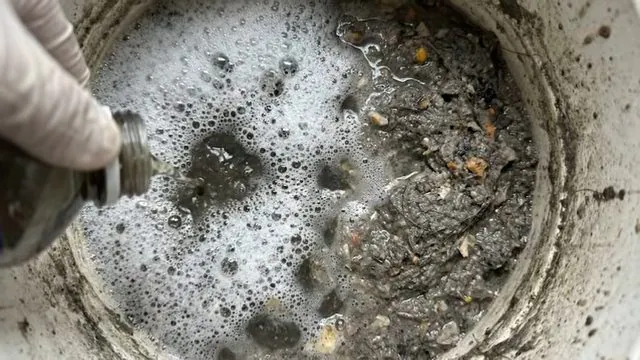
Camera inspection before any repair is quoted
Nobody should quote you a sewer repair without looking inside the line first. A camera run from the access point shows the pipe material, where any defect is, how far along the line it sits, and roughly how deep.
| What the camera shows | What it means | Usual next step |
|---|---|---|
| Roots entering at a joint | Roots have found a gap and will keep returning | Clear the roots, then repair or line that joint |
| A belly or sag | A low section where waste and water sit | Repair of that section; clearing alone will not fix it |
| Cracked or offset sections | Older pipe has shifted or broken | Spot repair or a relined section, depending on the host pipe |
| Collapsed section | The line has lost its shape | Excavation and replacement of that section |
| Grease or scale buildup | The pipe is sound but narrowed | Cleaning, often hydro jetting |
You get the recording. If the defect is on the city's lower lateral, that is the evidence the utility needs. If it is on your upper lateral, it is the basis for comparing a section repair against relining the pipe.
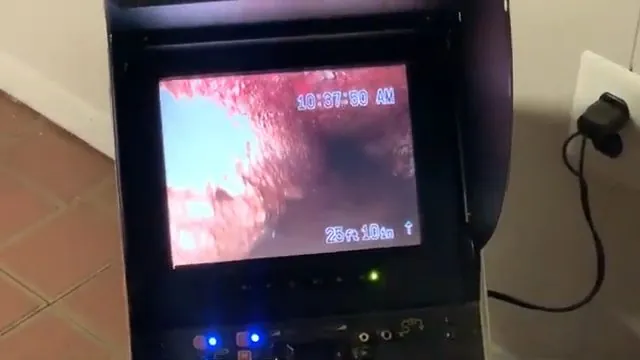
Clearing the main line versus repairing it
A blocked main line can often be cleared in a single visit, depending on access and plumber availability, with a sewer cable through the access point. That restores flow, and for a one-off blockage it may be all the line needs.
Clearing does not repair anything, though. Roots cut back at a cracked joint will grow back through the same crack, and a belly will keep collecting waste. If the camera shows a structural defect, repeat clearing becomes a recurring cost rather than a fix. For lines coated in grease rather than blocked by roots, water jetting cleans the wall rather than boring through the middle.
Spot repair, full replacement, or lining
Once the camera has located the defect, the choice usually comes down to three options. The right one depends on how much of the line is affected and what condition the rest of it is in.
- Spot repair. One section is excavated and replaced. Best when the defect is isolated and the rest of the line is sound.
- Full replacement. The whole upper lateral is replaced by excavation. Best when the pipe has failed in several places along its length.
- Lining. A new pipe is formed inside the old one without digging a trench. Best when the host pipe is cracked or leaking but still holds its shape. The trenchless sewer repair page covers when it works and when it does not.
Older Palo Alto homes often still have their original cast iron or clay laterals, which is normal for the era rather than a defect in itself. Age alone is not a reason to replace a line; the camera is.
Camera footage shows a defect? Get a written range for each repair option.
Call (833) 840-2034What digging in Palo Alto involves
Sewer work in Palo Alto is not something to hand to anyone who would rather keep the city out of it. Rule 23 requires lateral repairs and replacements to meet the city's current utility standards and to be inspected and approved, with charges set by its rate schedule.
- Locate utilities first. Underground lines have to be marked before any excavation, through 811, the national call-before-you-dig service.
- Expose and repair to standard. The repaired section is built to the city's utility standards so it passes inspection.
- City inspection. The work is inspected and approved before it is backfilled.
- Confirm the backwater valve. While the line is exposed is the easiest moment to check it. The city's rule calls for one wherever a drain sits low enough to flood if the street side backs up.
Trees and large planting are not permitted within public utility easements, partly to keep roots away from the lines. If a tree is the cause, that is worth knowing before you replant over a repaired section.
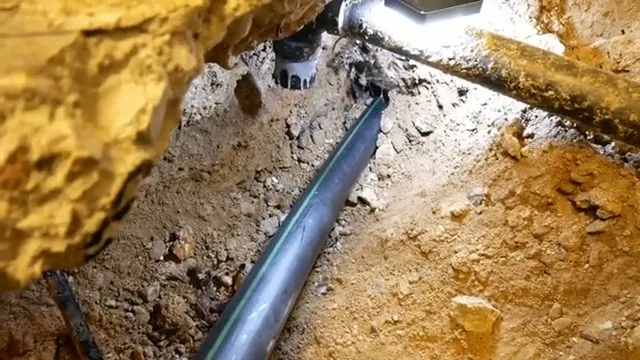
Shared, multi-unit and commercial sewer lines
Where an ADU, a duplex or a small commercial building shares one lateral, a defect affects every unit connected to it, and a backup tends to appear in whichever building sits lowest.
Commercial kitchens add grease to the picture. Palo Alto Municipal Code Chapter 16 requires grease control devices to be installed and maintained, and the city can recover cleaning costs where grease from a property is traced to a problem in its system.
Sewer line repair questions
How much does sewer line repair cost in Palo Alto?
It depends on the depth of the line, the length affected, the access and the method, so we quote a written range after the camera inspection and before any digging. As reference points, hydro jetting a main line typically runs about $450 to $950, and trenchless lining about $3,500 to $8,500, depending on footage and pipe condition.
Does sewer lateral work in Palo Alto need a plumber with a California license and a city inspection?
Yes. Rule 23 requires lateral repairs and replacements to meet the city's utility standards and to be inspected and approved by the city. The contractor should hold a California C-36 plumbing license, which you can confirm on the CSLB public lookup.
Who pays if the blockage is on the city's part of the lateral?
The city is responsible for the lower lateral from the main to the first city cleanout, so a defect there is its section. Report the stoppage to City of Palo Alto Utilities, and keep the camera recording, which shows where the defect sits.
Do I need a backwater valve?
If any drain in the house sits low enough to flood when the street side backs up, the city's rule calls for an approved backwater valve, installed to the California Plumbing Code. It is a one-way gate that stops sewage flowing back in.
Will roots keep coming back after the line is cleared?
Usually, yes, if they entered through a crack or an open joint. Clearing removes the roots but not the gap they came through. A camera run shows whether the joint needs repairing or relining to stop it for good.
Sewer backing up in Palo Alto?
Stop running water and call. We clear the line, camera it, tell you whose section the problem is on, and give a written range for each repair option before anything is dug.