
Palo Alto, CA · Trenchless Lining · No-Dig Repair
Trenchless Sewer Repair in Palo Alto, CA: Does the Camera Say Your Line Can Be Lined?
The camera found a crack, a joint that has opened up, or roots coming through, and the quote in front of you involves a trench across the front yard. Lining is the option worth asking about first, as long as the old pipe is still in good enough shape to line. Trenchless pipe lining and relining in Palo Alto, CA depends on what the camera shows about cracks, roots and the condition of the old pipe.
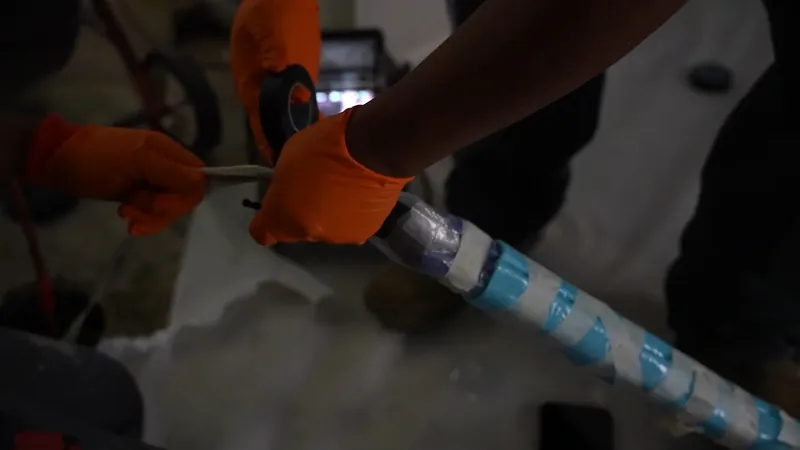
Lining a pipe versus digging it up
A trenchless repair rebuilds the inside of the existing sewer line instead of replacing it from above. An open trench exposes the pipe along the damaged length, takes the old section out and puts a new one in. Both are real repairs. The difference is what happens to everything sitting on top of the line.
| Trenchless lining | Open trench | |
|---|---|---|
| What gets dug | Usually nothing, or one small access pit | The full damaged length |
| Driveways, paths and planting | Normally left in place | Removed and restored afterwards |
| Tree roots near the line | Not cut by a trench | Trench may run through the root zone |
| Time the drains are out of service | Typically a day | Often longer, depending on depth and restoration |
| Pipe that has collapsed or sagged badly | Not suitable | Suitable |
The last row is the one that matters. Lining follows the shape of the old pipe, so it can only fix a line that is still round and continuous. That is why the camera decides between the two, not the price sheet.
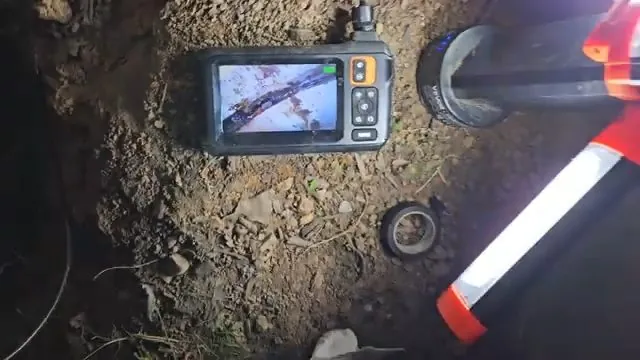
Been told the sewer has to be dug up? Ask whether it can be lined first.
Call (833) 840-2034How a cured-in-place liner goes in
Cured-in-place pipe, usually called CIPP, is the most common trenchless method for a residential lateral. The old pipe becomes the form for a new one inside it.
- Camera and measure. The line is recorded end to end, so the liner can be cut to the exact length that needs it.
- Clean the wall. Roots, grease and scale come out first, usually by jetting the line, because a liner bonds to a clean surface.
- Wet out the liner. A felt tube is saturated with resin on site.
- Install it. The tube goes in through the cleanout, either by inversion, turning it inside out with air or water pressure, or by being pulled into place.
- Cure it. Heat, steam or light hardens the resin against the old host pipe, leaving a new jointless pipe inside it.
- Reopen and check. Any branch connections are cut back open, and a second camera run confirms the result before the line goes back into service.
Most residential lining is finished in a day, with the house unable to drain only while the liner cures.
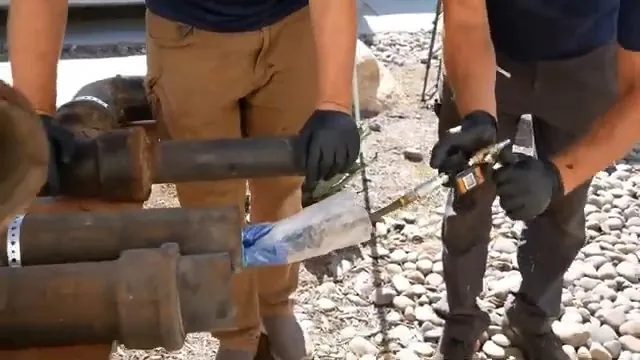
When the pipe is too far gone to line
Lining is not a cure-all, and a contractor who offers it for every line is not looking at the footage. These conditions usually rule it out, at least for the affected section.
- A collapsed section. There is no pipe left for the liner to follow.
- A deep belly or sag. The liner keeps the dip, so water and waste keep pooling in it.
- Joints offset by more than the liner can bridge. The new pipe would have a lip that catches debris.
- A line already lined once and failing again. That usually calls for replacement rather than another layer.
When one of these applies, the choice is between a spot excavation of the bad section, full replacement, or pipe bursting, a trenchless method that pulls a new pipe through the old one and breaks the old one apart as it goes. Our conventional sewer line repair page covers the options.
Under the slab: rerouting instead of breaking concrete
The same no-dig thinking applies inside the house. When a supply line under a concrete slab fails, the traditional fix is to cut the floor open over it. The alternatives leave the slab alone.
- Reroute. Abandon the failed line under the slab and run a new one through walls or the attic. This is often the most practical choice in a single-story house.
- Line it. Some supply lines can be cleaned and coated inside with an epoxy lining, which suits pipes that are sound but starting to pit.
This is a different situation from Eichler radiant heating tubing, which carries heating water rather than household supply and needs its own assessment. Locating the leak comes first in every case, and that is covered on our slab leak detection and repair page.
City standards and inspection for lateral work
Palo Alto's wastewater rule, CPAU Rule and Regulation 23, holds any lateral repair or replacement to the city's WGW Utility Standards, and the finished work has to pass a city inspection before it is accepted, whether the lateral was lined or dug up. The standards themselves include sections on cured-in-place pipe and on the polyethylene pipe used in pipe bursting.
Whether lining is acceptable for your section of the line is confirmed before a price is given, not discovered afterwards. If an access pit is needed for either method, Underground Service Alert has to be called on 811 at least 48 hours before any excavation, so buried gas and other utilities are marked first.
Want to know if your lateral can be lined? It starts with a camera run.
Call (833) 840-2034Driveways, trees and brick paths: what a Palo Alto trench disturbs
Much of the case for lining in Palo Alto is about what sits above the line. Front-yard laterals here commonly run under mature trees, brick paths and driveways, and the cost of a trench includes putting all of that back.
Rule 23 already keeps trees and large plants out of public utility easements, partly because roots damage sewer lines. On private property they are often already there, and a liner is installed without cutting through the root zone at all.
What lining costs against what digging costs
Trenchless lining of a residential sewer pipe falls in a wide market range of about $3,500 to $8,500, depending on the length lined, the pipe diameter, how much cleaning the line needs first, and how many branch connections have to be reopened.
Open-trench repair is harder to put a range on because depth, access and surface restoration vary so much from one property to the next. That is why both options are priced after the camera run, side by side, with a written range for each.
Trenchless lining questions
How much does trenchless sewer repair cost in Palo Alto?
Lining a residential sewer pipe typically runs about $3,500 to $8,500, depending on the footage, the pipe size, how much cleaning comes first and how many connections need reopening. We quote it after the camera inspection, next to the cost of digging, so you can compare.
Who is allowed to line a sewer lateral in Palo Alto?
It is plumbing work: look for a California C-36 plumbing license, and confirm it through the state license board's online lookup before you sign. The finished lateral still has to meet the city's utility standards and pass city inspection.
Can roots grow back through a liner?
Roots get in through joints and cracks. A cured liner forms one continuous pipe with no joints along its length, so the usual entry points are closed. Roots can still reach a section that was not lined, which is why the camera footage decides how much of the line is covered.
Does a liner make the pipe smaller?
Slightly, by the thickness of the liner wall. In practice a smooth new interior usually carries waste at least as well as an old pipe roughened by scale and roots, but on an already undersized line it is worth asking about before you decide.
Can I use the plumbing while the work is being done?
Not the drains, while the liner is going in and curing. Water from taps still works, but anything that drains has to wait, which for a typical residential lateral means planning for most of a day without draining fixtures.
Told your sewer line has to be dug up?
Call and ask for a camera inspection first. If the pipe can be lined, you will see the footage and get a written range for lining and for digging before any decision is made.