
Palo Alto, CA · Burst and Broken Pipes · Emergency
Burst Pipe Repair in Palo Alto, CA: Stop the Flow, Then Find Out Whose Line It Is
Water is coming out of somewhere it should not, and it is not slowing down. The next few minutes decide how much of the floor, wall and ceiling has to be dried or replaced afterwards, so the order of what you do matters more than how fast you do it. Burst and broken pipe repair in Palo Alto, CA starts with shutting off the water and finding out whose line failed.
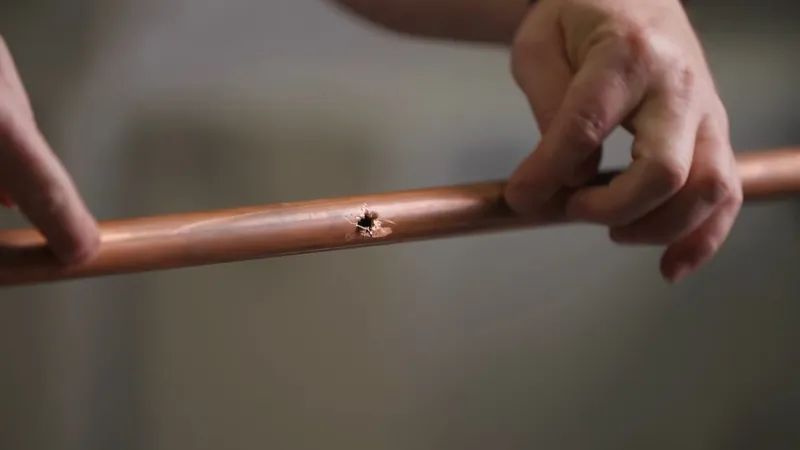
Stop the water, then call
If the main shut-off is within reach, close it before anything else. If you do not know where it is, call while you look: we can talk you through finding it.
- Close the valve. Main shut-off first; a fixture stop is enough only if the break is clearly after it.
- Drain the lines. Open a cold tap on the ground floor or outside, so whatever is still in the system drains there rather than through the break.
- Mind the electrics. If water is reaching outlets, light fittings or the panel, switch those circuits off at the breaker only if you can do it standing somewhere dry.
- Move what you can. Lift rugs, electronics and paperwork out of the water's path.
- Take photos. Photograph the break and the wet areas before anything is moved or cleaned up.
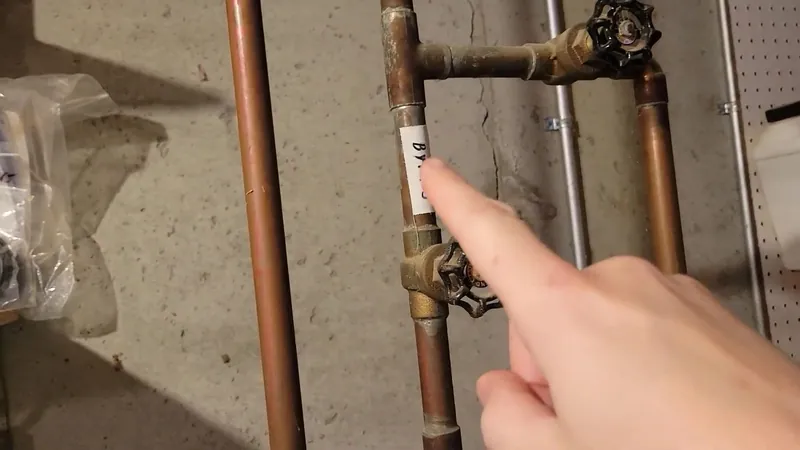
Water still running? Call now and keep looking for the valve while you talk.
Call (833) 840-2034Water coming up near the street? That one is the city's
Not every burst pipe is yours to repair. Under its water service rule, City of Palo Alto Utilities maintains the service up to and including the water meter, which normally sits near the curb. Pipe between the meter and the house belongs to the property owner.
- At or before the meter. Water bubbling up in the street, the sidewalk or around the meter box is a utility matter. Call the city's 24-hour emergency line, (650) 329-2579.
- Between the meter and the house. That is your service line. Close the house valve; if the leak is upstream of it, the plumber can shut the supply at the meter.
- Inside the house. Walls, ceilings, fixtures and appliance connections are all on your side of the line.
Why pipes give way
A pipe that bursts has often been weakening for a while, and knowing why it failed is what tells you whether the rest of the system is likely to follow.
- Appliance and fixture connectors. Rubber and braided supply hoses on washing machines, toilets and faucets age out and can split without warning.
- Pressure that is too high. A failed pressure regulator lets full street pressure into the house, which strains every joint and fixture.
- Water hammer. The bang you hear when a valve snaps shut is a pressure spike travelling down the pipe, and repeated spikes loosen fittings.
- Old pipe. Corroded galvanized steel and copper with pinhole wear are both more likely to fail at a joint or a weak spot.
- Physical damage. A nail, screw or saw cut from earlier work can sit quietly for years before the pipe around it gives out.
If the plumber finds the pipe itself is worn throughout rather than failed in one spot, that is worth knowing before the walls are closed again.
Frozen pipes: rare in Palo Alto, but not never
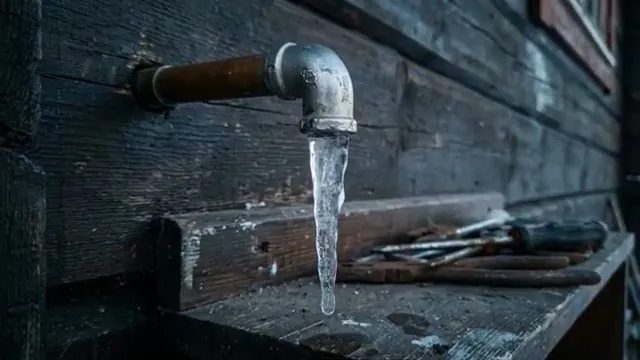
This is not a cold-winter city, but it does freeze. NOAA climate normals put Palo Alto at or below 32 degrees on an average of 14 nights a year, and the record low is 20 degrees. A few hours below freezing is enough to split a pipe that has no protection at all.
- Outdoor hose bibs with a hose still attached
- Pipes in unheated garages, sheds and exterior walls
- Irrigation supply lines above ground
- Water lines running through crawlspaces open to the outside air
Insulation on exposed runs and disconnecting garden hoses before a cold snap prevent most of these. A frost-proof sillcock, which shuts the water off inside the wall, is a sound upgrade for an exposed outdoor tap. If a pipe has frozen, open the tap it feeds and warm the pipe gently with a hair dryer. Never use an open flame.
How a broken pipe is repaired
The damaged section is cut out back to sound pipe, and a new section is joined in. On copper that means soldered or press fittings; on PEX, crimp or expansion fittings. A repair clamp can hold a break for a short while, but it is a stopgap, not the repair.
- The supply is shut and the line drained.
- Enough wall or ceiling is opened to reach sound pipe on both sides of the damage.
- The section is replaced, and nearby joints are checked for the same weakness.
- The water is turned back on slowly and the repair is watched under full pressure before anything is closed up.
When this is the second or third failure on the same system, it is worth asking whether patching is still the right approach. Our whole-house repiping page covers the alternative.
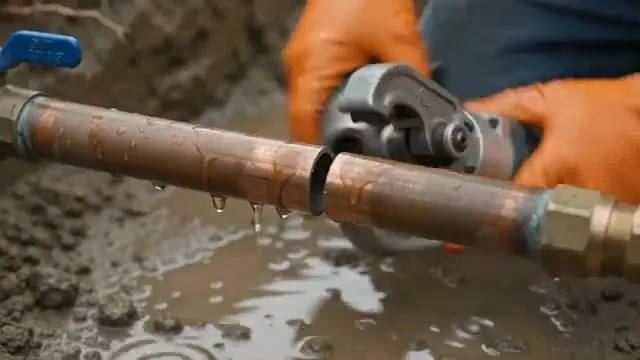
Pipe split overnight? Call for a repair and a written range before work starts.
Call (833) 840-2034Cleaning up after a burst
Clean supply water is the easiest kind to recover from, as long as it is removed and dried quickly. The longer it sits in subfloors, insulation and the bottom of walls, the more has to be cut out instead of dried.
Standing water comes out first, then the space is dried with air movers and dehumidifiers while moisture readings are tracked. Extraction and drying are covered in detail on our water damage page.
For insurance, many homeowner policies treat a sudden break differently from a slow leak that went unnoticed. Photos taken at the time and the plumber's written description of what failed are the two records an adjuster will usually ask for.
Burst pipes in apartments and small businesses
In a shared building, one break can reach several units or tenants below it, and the shut-off may control more than one space. Find out in advance which valve feeds which area, and who holds the keys to the rooms where those valves are.
For shops, offices and small multi-unit buildings, the repair is the same, but notifying the other occupants and the owner comes first, and a section of the building may need to stay off while the work is done.
Burst pipe questions
A pipe burst. How do I shut the water off?
Close the main shut-off where the supply enters the house, usually in the garage or on an outside wall, by turning it clockwise or a quarter turn. Then open a low cold tap to drain the lines. If the water is coming up at or before the meter near the street, call City of Palo Alto Utilities on (650) 329-2579.
How much does burst pipe repair cost in Palo Alto?
It depends on where the break is, what the pipe is made of and how much wall or ceiling has to be opened to reach it. Drying and any finish repairs are separate. You get a written range once the break has been seen, before the repair begins.
Who should repair a burst pipe?
A contractor holding a California C-36 plumbing license. You can check a license number on the Contractors State License Board's online lookup before work starts, and it is reasonable to ask for it on the phone.
Do pipes really freeze in Palo Alto?
Occasionally. The city averages about 14 nights a year at or below freezing, with a record low of 20 degrees. Pipes indoors are rarely at risk; hose bibs, garage lines and exposed outdoor runs are the ones that split.
Will my insurance cover a burst pipe?
That depends entirely on your policy, and only your insurer can say. Many policies distinguish sudden breaks from long-term leaks, so photograph the damage straight away and keep the plumber's written description of what failed.
Pipe burst in Palo Alto?
Shut the water off if you can, then call. If you cannot find the valve, call first and we will help you find it, then get a plumber to the break.