
Palo Alto, CA · Whole-House Repiping · PEX and Copper
Whole-House Repiping in Palo Alto, CA: Repipe Now or Keep Repairing Leaks?
The third leak in two years, rusty water first thing in the morning, or a shower that loses pressure whenever someone runs a tap. At some point patching the plumbing costs more, in money and disruption, than replacing it. This page is about recognizing that point and what the job involves.
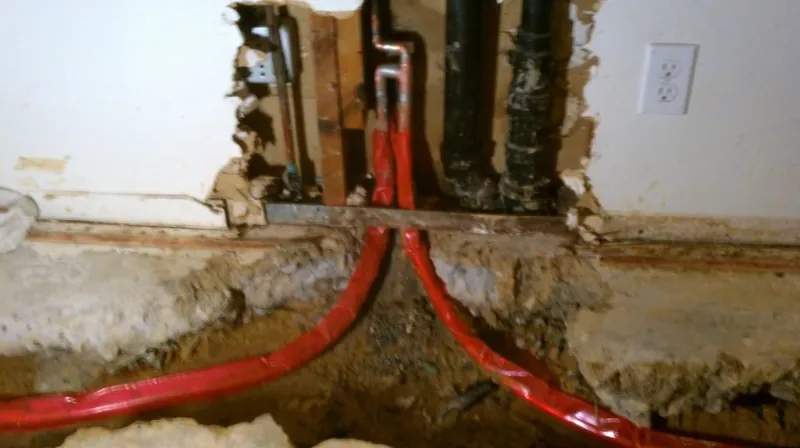
Repair or repipe: signs the system is past patching
One leak is a repair. A pattern is something else, and these are the patterns that usually justify pricing a full replacement.
- Leaks in different places. When failures turn up in several rooms rather than one joint, the pipe itself is the problem.
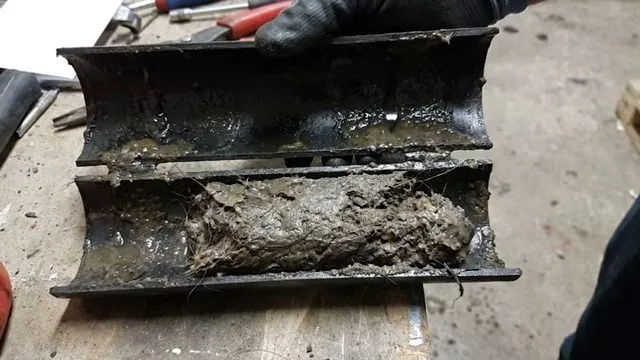
- Discolored water. Brown or rust-tinted water at the first draw of the day often comes from corroding galvanized steel.
- Falling pressure. Galvanized pipe narrows from the inside as it corrodes, so flow drops slowly over years.
- A patchwork system. Copper, steel and plastic spliced together at many points means many transitions, each one a weak spot.
- Walls opening anyway. A kitchen or bathroom remodel is the least disruptive time to replace the lines behind those walls.
If only one of these applies, a targeted repair may still be the sensible choice. A plumber should be willing to tell you that.
Several leaks already? Ask for a repair price and a repipe price side by side.
Call (833) 840-2034What is usually inside the walls of an older Palo Alto house
Palo Alto's housing runs from Professorville's late-1890s homes to the Eichler tracts of the 1950s and everything built since. What follows is general to homes of each era, not a description of any particular house, and many have already been partly replaced.
- Early twentieth-century houses. Original supply piping in homes of this period was commonly galvanized steel, often since replaced in sections with copper.
- Midcentury slab houses. In single-story homes built on a slab, some supply piping can run in or under the concrete, which is why repipes in these houses are routed overhead instead.
- Later homes. Copper became the usual supply pipe for decades, and pinhole leaks in aging copper are a common reason those systems are replaced.
A camera is not needed to find out what you have. Look where the pipe enters the water heater, under sinks and at the main shut-off, and note the material at each.
PEX or copper for the new lines
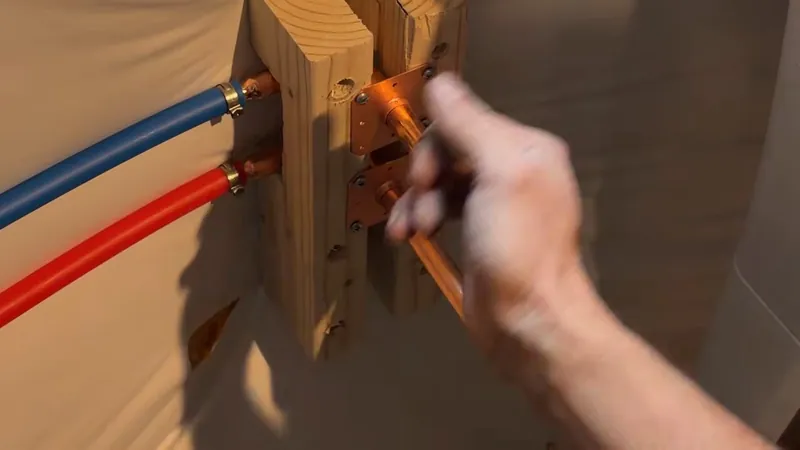
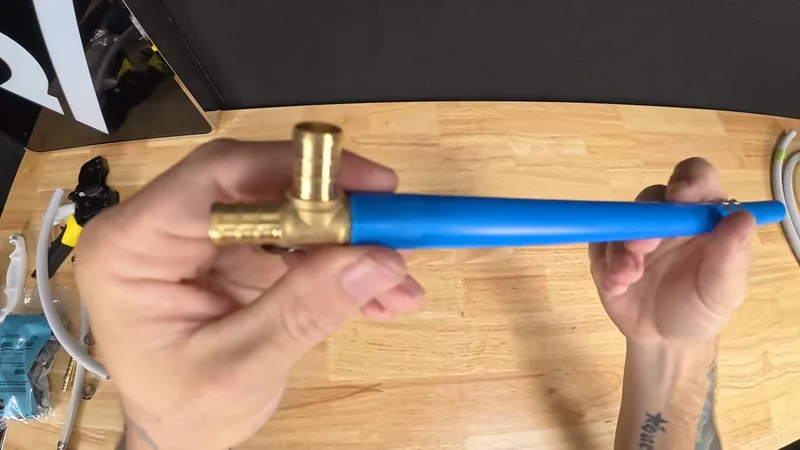
Both are proven materials. PEX is a flexible plastic tubing; copper is the rigid metal pipe most people picture. The California Building Standards Commission approved PEX for drinking water use statewide in 2010, and it is widely used for full repipes.
| PEX | Copper | |
|---|---|---|
| Running it through a finished house | Flexible, so it snakes through walls with fewer and smaller openings | Rigid, so it needs straighter runs and more access |
| Joints | Fewer, since long runs bend around corners | More, since each change of direction is a fitting |
| Freeze tolerance | Expands somewhat before it splits | Splits more readily when frozen |
| Sunlight | Must be shielded from UV exposure | Unaffected |
| Typical cost of the whole job | Usually lower | Usually higher |
Where new pipe meets old, for example at a water heater, the right transition fittings matter. Joining dissimilar metals directly invites corrosion, which is why a dielectric fitting or a suitable connector is used at those points.
What Palo Alto's water report says about pipe
City of Palo Alto Utilities adjusts the pH of its water, averaging 9.3 in 2025, specifically for corrosion control. In the city's most recent copper sampling, none of 38 household taps exceeded the regulatory action level of 1,300 ppb.
The same report says the city has finished checking its service lines and that none in the distribution system are lead. In practice, the choice between PEX and copper here comes down to the house, the budget and how much wall you are prepared to open.
How a repipe is done while you live in the house
- Plan the route. Each fixture is mapped and the new runs are planned to use the attic, crawlspace or closets where possible, keeping wall openings small.
- Permit. The job is filed with the city before work starts.
- Protect the house. Floors and furniture near each opening are covered, and dust is contained.
- Run the new lines. New supply pipe goes in alongside the old, which stays in service until each fixture is ready to switch.
- Switch fixtures over. Each fixture is connected to its new stub-out, usually one area at a time, so the water is off for hours rather than days.
- Test and inspect. The new system gets a pressure test and a city inspection before the walls are closed.
- Patch. The access openings in drywall are patched. Confirm in writing whether finish painting is included.
Most of the disruption is noise and dust in one part of the house at a time. On many jobs the water is back on each evening.
Want to know how disruptive yours would be? Call and describe the house.
Call (833) 840-2034Permits, inspection and older fixtures
Replacing the water supply throughout a house is permitted work, and the inspection is part of what you are paying for: it confirms the system was tested and installed to code before it is hidden.
In older homes the permit can bring one more requirement. California's SB 407 rules apply to property built on or before January 1, 1994, and on a single-family home, permitted alterations or improvements require non-compliant fixtures to be replaced with water-conserving ones.
- Toilets at 1.28 gallons per flush
- Showerheads at a flow rate of 2.0 gallons per minute
- Bathroom faucets at 1.5 gallons per minute
- Kitchen faucets at 1.8 gallons per minute
Palo Alto's form for this says the permit cannot be finaled until the signed certificate is returned to the city, so it is worth budgeting for any fixtures that will need replacing.
What a whole-house repipe costs
A whole-house repipe in PEX falls in a wide market range of about $4,500 to $11,000 in this area. The square footage of the house, the number of bathrooms, and whether it is single-story or two-story, which decides how much wall has to be opened to reach the upper floor, move a job across that range.
Copper and slab houses that need overhead routing sit higher. You get a written range for your house after a walk-through, before anything is opened.
Whole-house repiping questions
What does a whole-house repipe cost in Palo Alto?
In PEX, a whole-house repipe sits in a wide market range of about $4,500 to $11,000, depending on the size of the house, how many bathrooms it has and whether it has one story or two. Copper and slab houses tend to cost more. You get a written range after a walk-through.
Who can repipe a house, and is a permit needed?
Repiping falls under California's C-36 plumbing classification, and any contractor's license can be looked up on the Contractors State License Board website. A whole-house repipe is permitted work in Palo Alto, with an inspection before the walls are closed.
Is PEX allowed in California?
Yes. The California Building Standards Commission approved PEX for potable water statewide in 2010, after an earlier approval was repealed under a court order. It is installed to the conditions in the plumbing code, including protection from sunlight.
Will I have water while the house is being repiped?
For most of the job, yes. The new pipe is run while the old system stays in service, and fixtures are switched over one area at a time, so the water is typically off for hours at a stretch rather than for days.
How long does a whole-house repipe take?
For a typical single-family house, the pipe work itself usually takes a few days, with the inspection and drywall patching on top. Larger or two-story houses, and slab houses that need overhead routing, take longer.
Thinking about repiping a Palo Alto home?
Call and describe what has been going wrong. We will tell you honestly whether it points to a repair or a repipe, and give you a written range for both.