
Palo Alto, CA · Water Treatment · Filtration and Softening
Water Softeners in Palo Alto, CA: Do You Need One When the Water Is Low in Minerals?
Someone has told you that you need a water softener. Before you buy one, it is worth reading what the city's own testing shows, because in Palo Alto the water question most households actually have is about taste and smell, not hardness. Water softener installation and repair in Palo Alto, CA is a narrower job than it sounds, because the water here is already low in minerals.
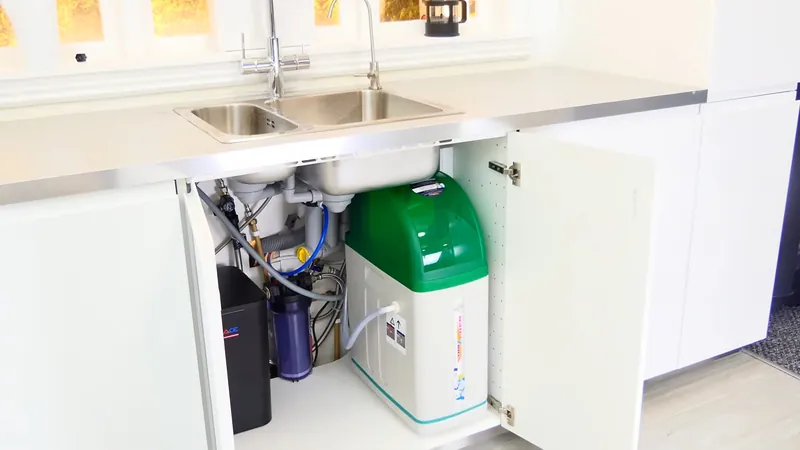
How hard is Palo Alto water, really?
City of Palo Alto Utilities buys its water from the SFPUC regional system, drawn mainly from Hetch Hetchy. Its 2025 water quality report measured hardness at an average of 62 mg/L as calcium carbonate, with a range from 8.1 to 112.
| USGS category | Hardness in mg/L | Where Palo Alto falls |
|---|---|---|
| Soft | 0 to 60 | The low end of the city's range |
| Moderately hard | 61 to 120 | The 2025 average of 62, just over the line, and the top of the range |
| Hard | 121 to 180 | Not reached in 2025 |
| Very hard | Over 180 | Not reached in 2025 |
An average of 62 mg/L is roughly 3.6 grains per gallon, the unit softener sellers tend to quote. That is a small fraction of what homes in hard-water regions deal with. The range does mean the water is firmer at some times than others, which can show up as faint spotting on glass, but it is rarely enough to damage plumbing.
Chloramine: the taste and smell question
Palo Alto's water is disinfected with chloramine, a combination of chlorine and ammonia. The city's report gives the reason: it maintains a disinfectant residual through the pipes and minimizes the formation of regulated disinfection byproducts. The highest running annual average in 2025 was 2.78 ppm.
It is safe to drink, and it is also the source of the faint chlorine smell some people notice. Unlike plain chlorine, it does not fade quickly from a jug left on the counter.
- Taste and smell. Carbon filtration is the usual answer, and chloramine needs a longer contact time with the carbon than chlorine does, so the filter has to be sized for it.
- Fish tanks and ponds. Chloramine is toxic to fish, so water for an aquarium or pond has to be treated with a product made for chloramine, not just chlorine.
- Medical use. Anyone using water for home dialysis should follow their care team's guidance on treatment.
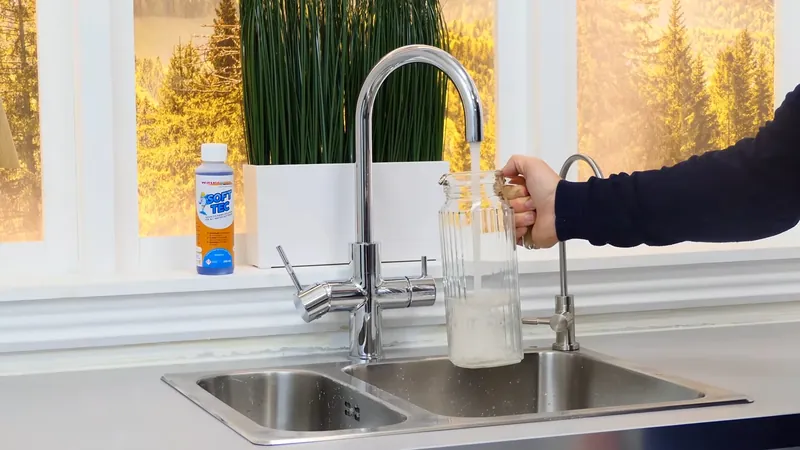
Bothered by the taste? Call and we will talk through filtration first.
Call (833) 840-2034Whole-home filtration systems
A whole-home system treats water where it enters the house, so every tap and shower gets the same water. In Palo Alto that usually means carbon sized for chloramine, rather than a softener.
- A sediment prefilter. Catches grit and particles before they reach the carbon, which extends its life.
- The carbon stage. A tank or large cartridge with enough carbon, and enough contact time, to reduce chloramine at the flow the house actually uses.
- A bypass valve. Lets the system be serviced or isolated without shutting the house off.
- Space and access. Usually a garage wall near the main line, with room to change filters and, for some tank systems, a drain and an outlet.
Filters and media are consumables. Ask what the replacement schedule is for your household's water use, and what it costs per year, before choosing a system.
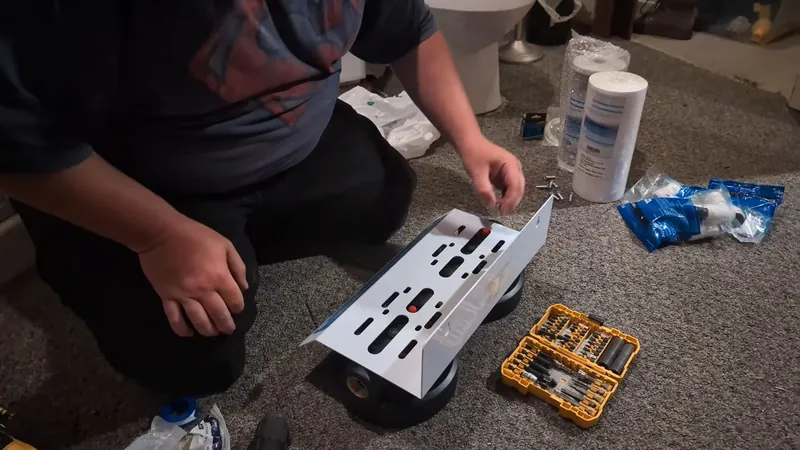
Drinking water at one tap
If the concern is only the water you drink and cook with, treating one tap is simpler and less costly to run than treating the whole house.
- Under-sink carbon filter. Addresses taste and odor at the kitchen sink with a dedicated faucet or the existing one.
- Reverse osmosis. Removes a much wider range of dissolved substances, sends some water to the drain as part of the process, and needs space under the sink for a small storage tank.
- Refrigerator filter. Many fridges have one already. It is only as good as how recently it was changed.
If you still want a water softener
Some households prefer softened water for its feel, or to cut spotting on glass shower doors. That is a legitimate choice, and it is worth making with the full picture.
- How it works. A softener uses ion exchange: hardness minerals stick to a resin bed and are replaced with sodium or potassium. The bed is regenerated with brine from a salt tank.
- Carbon goes first. Chlorine and chloramine can wear down softener resin over time, so where both are installed, the carbon stage usually comes before the softener.
- No-salt conditioners. These do not remove hardness minerals; they aim to change how scale forms. They are not softeners, whatever the box says.
- Discharge. Regeneration sends salty water to the sewer. We did not find a Palo Alto rule restricting salt-based softeners, but rules differ across California, so confirm before you buy.
Outdoor taps and irrigation are usually left on unsoftened water, since softened water is not good for plants and there is no reason to soften water for the garden.
Palo Alto's alkaline pH of 9.3 and why it needs no correction
Palo Alto's water averaged a pH of 9.3 in 2025, which is alkaline. The city adjusts it to that level on purpose, for corrosion control.
That means acid-neutralizing filters, which raise the pH of acidic well water, have no job to do here, and nothing in the treatment above is meant to lower it. If someone proposes treating Palo Alto water for low pH, ask them to show you the reading.
Installing and repairing water treatment equipment
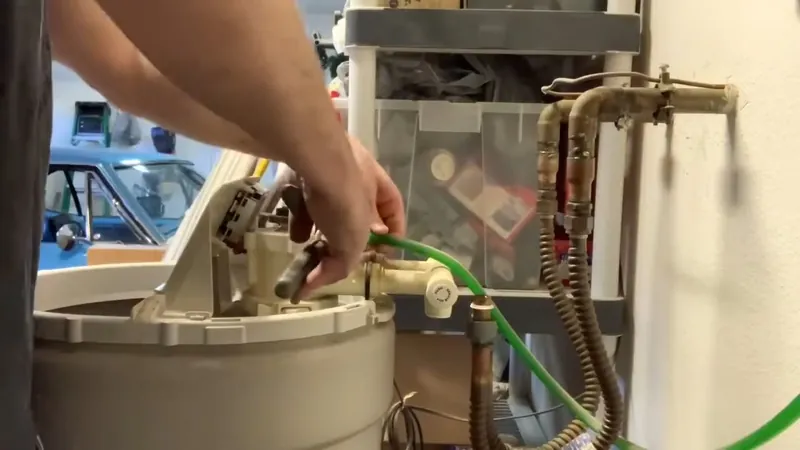
A good installation puts the equipment where it can be reached for service, on a bypass loop, with a proper drain connection where the system needs one.
- A softener that has stopped regenerating, often a control valve or timer fault
- A salt bridge, a hard crust in the brine tank that stops the salt dissolving
- Exchange media that has worn out after years of service
- A carbon tank or cartridge past its service life, which shows up as the taste coming back
- Leaks at the connections or the bypass
Installation is plumbing work on the main supply, so it should be done by a plumber with a California license and to code.
Water treatment questions
Do I need a water softener in Palo Alto?
Most homes do not. The city's 2025 average hardness of 62 mg/L sits right at the edge of the soft range on the USGS scale, about 3.6 grains per gallon. A softener is a preference here, not a fix for damaging scale. Taste and smell from chloramine are the more common reason to treat the water.
Why does my Palo Alto tap water smell like chlorine?
Because it is disinfected with chloramine, which keeps the water protected as it travels through the pipes. The city reported a highest running annual average of 2.78 ppm in 2025. A carbon filter sized for chloramine reduces the taste and smell.
How much does a whole-home water filtration system cost?
It depends on the household's flow rate, how much carbon is needed for chloramine, and how the system ties into the main line. Ongoing filter or media replacement is a cost to ask about too. You get a written range once the installation location has been seen.
Who should install a water softener or filtration system?
A contractor with a California C-36 plumbing license, since the job connects to the main water supply. You can verify a license on the Contractors State License Board's website before work starts.
Does a water softener remove chloramine?
No. A softener exchanges hardness minerals; it is not designed to remove chloramine, and chloramine can shorten the life of its resin. Carbon filtration handles chloramine, and is usually installed ahead of a softener when a home has both.
Not sure what your water needs?
Call and tell us what you are noticing. We will tell you plainly whether filtration, softening or nothing at all is the right answer for your home, before you buy anything.