
Palo Alto, CA · Garbage Disposals · Repair and Replacement
Garbage Disposal Repair in Palo Alto, CA: Fix It or Replace It?
You flip the switch and get a hum and nothing else, or silence, or a puddle in the cabinet under the sink. Most disposal problems fall into one of a handful of causes, and a few of them you can sort out safely before anyone comes out. Garbage disposal repair and installation in Palo Alto, CA covers jams, leaks and motor failure, and sometimes a replacement.
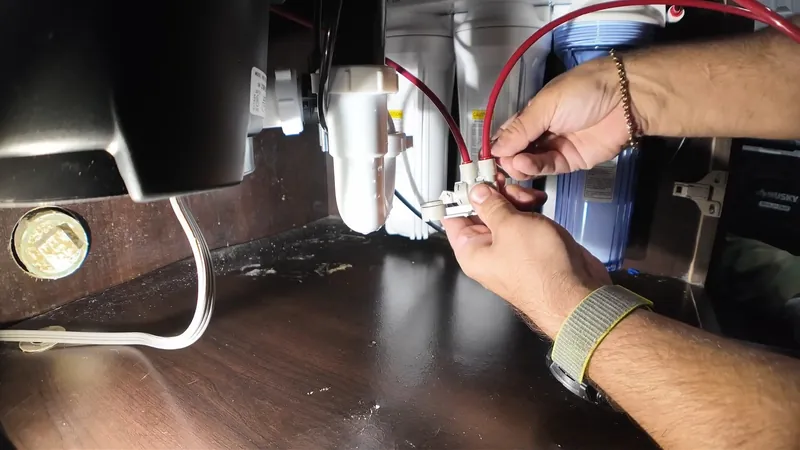
Disposal humming, silent or tripping the breaker: what it means
The sound a disposal makes, or does not make, narrows the problem down quickly.
| What you notice | Usual cause | Safe first step |
|---|---|---|
| Hums but does not spin | Something wedged between the flywheel and the grinding ring | Power off, then work it loose from underneath (see below) |
| Completely silent | The overload protection has tripped, or there is no power | Press the red reset button on the underside of the unit |
| Trips the breaker every time | A seized or failing motor | Leave it off and call; repeated resets can damage the wiring |
| Loud rattling or grinding | A utensil, bottle cap or fruit pit inside | Power off and remove it with tongs, never by hand |
| Runs, but the sink will not drain | A blockage in the drain line past the disposal | Stop running it and call; see drain cleaning |
Freeing a jammed disposal safely
A humming disposal is almost always jammed rather than broken, and clearing it takes a few minutes. Safety comes first, because the motor can restart without warning.
- Cut the power. Turn the wall switch off, then unplug the unit under the sink or switch off its breaker.
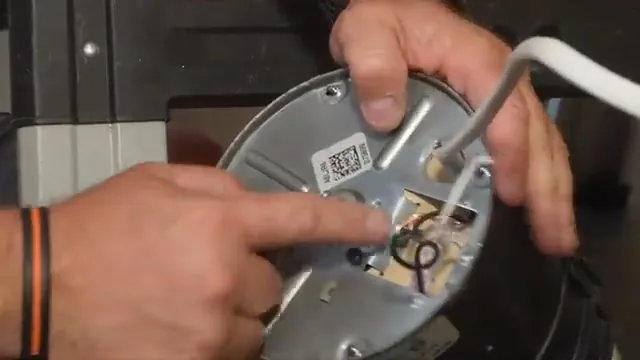
- Turn it by hand from below. Most units have a socket in the center of the underside for a quarter-inch hex key. Work it back and forth until the flywheel turns freely.
- Lift out what caused it. Use tongs or pliers, with a flashlight, to remove anything loose inside. Never put a hand into the opening.
- Reset and test. Wait a few minutes for the motor to cool, press the reset button, restore power, and run cold water before switching it on.
If the flywheel will not turn even with the key, or the unit hums again straight away, the motor or bearings are the problem, and that is a repair call.
Still humming after a reset? Call and we will tell you whether it is worth repairing.
Call (833) 840-2034Finding where the water is coming from
Leaks under a disposal come from one of three places, and where the water appears decides whether it is a repair or a replacement.
- At the top, where it meets the sink. The sink flange has lost its seal, usually old or dried-out plumber's putty, or the mounting ring has worked loose. This is normally a reseal.
- At the side. Either the dishwasher hose connection or the drain elbow's gasket. Tightening a clamp or replacing a gasket usually fixes it.
- From the bottom of the unit. The internal seals have failed and water is escaping through the housing. That cannot be repaired; the unit needs replacing.
Dry the outside with a towel, put a few drops of food coloring in some water, run it down the sink, and watch with a flashlight. The colored water shows exactly where it escapes.
Repair it or replace it
Disposals are simple machines, and the repairable faults are the ones outside the motor housing. Inside it, replacement is usually the better use of the money.
- Usually worth repairing. A jam, a tripped overload, a loose mounting, a leaking flange, a worn dishwasher connection or drain gasket.
- Usually time to replace. Water coming from the bottom, a burnt-out or seized motor, a cracked or corroded housing, or a unit that jams constantly.
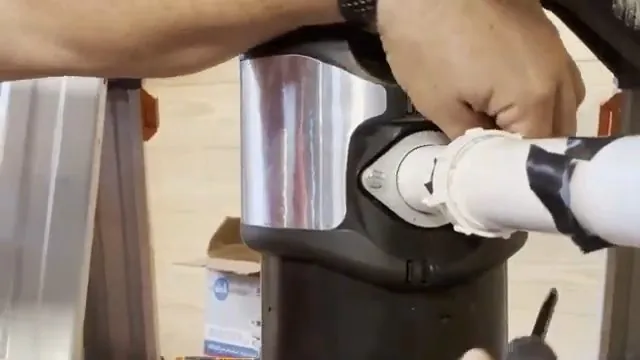
A replacement on the same mounting system often goes in quickly. A change of brand can mean replacing the mounting hardware at the sink as well.
Choosing a replacement unit
- Motor size. Disposals run from about one-third to one horsepower. A larger motor grinds more easily and jams less, but it needs more space under the sink.
- Feed type. A continuous feed model runs while you add scraps. A batch feed model runs only with its stopper in place, which some households prefer near children.
- Power. Some units plug into a switched outlet under the sink and some are wired directly. An outlet that is hard to reach adds time to the job.
- Dishwasher connection. A new unit has a knockout plug sealing the dishwasher inlet. If the dishwasher drains through the disposal, that plug has to come out, or the dishwasher will not drain.
What Palo Alto asks you to keep out of the drain
The City of Palo Alto strongly discourages using a disposal for food scraps, and it says why. In its Zero Waste guidance, food scraps sent down the drain often carry the fats, oils and grease that cause most residential sewer backups, and grinding them uses several gallons of water.
- Put food scraps, including meat, bones and dairy, in the green cart
- Never pour grease or cooking oil down the sink or the disposal
- Wipe greasy pans with a paper towel before washing them
- Fit a sink strainer and empty it into the green cart
- Take large amounts of cooking oil to the Household Hazardous Waste Station
A disposal can still be useful for the small scraps that get past a strainer. Used that way it lasts longer, jams less, and protects the sewer lateral that the property owner is responsible for.
Disposal leaking or dead? Call for a repair or a replacement range in writing.
Call (833) 840-2034What garbage disposal replacement costs
Replacing a garbage disposal falls in a wide market range of about $225 to $550 in this area. Three things move a job across it: the motor size, from one-third to one horsepower; how easy the outlet or electrical connection is to reach; and the type of sink flange, which may need replacing to match a new unit.
A simple repair such as a reseal or a jam costs less than a replacement. You get a written range once the unit has been looked at, before any work begins.
Garbage disposal questions
Why does my garbage disposal hum but not turn?
It is jammed. Something is wedged between the spinning plate and the grinding ring. Switch off the power, turn the unit by hand from underneath with a quarter-inch hex key, remove the object with tongs, then press the reset button. If it still will not turn, the motor needs attention.
How much does it cost to replace a garbage disposal in Palo Alto?
Replacement sits in a wide market range of about $225 to $550, depending on the size of the motor, how easily the outlet can be reached and whether the fitting at the sink has to be changed. Repairs cost less. You get a written range before the work starts.
Who should install a garbage disposal?
A plumber with a California C-36 license, since the job connects to the drain and often the dishwasher. You can check a license on the Contractors State License Board's website. If a new outlet or hard-wired circuit is needed, that is electrical work.
Is it OK to put food scraps down the disposal in Palo Alto?
The city strongly discourages it. Its guidance is to put food scraps in the green cart, because scraps sent down the drain often carry grease that causes sewer backups. Small leftovers that slip past a sink strainer are fine; grease and oil never are.
Should I repair or replace a leaking disposal?
It depends on where it leaks. A leak at the sink or at a side connection is usually a reseal or a new gasket. Water coming from the bottom of the unit means the internal seals have failed, and the unit needs replacing.
Garbage disposal giving you trouble?
Call and tell us what it is doing. We can often talk you through a jam on the phone, and if it needs a repair or a new unit, you will get a written range first.